 Aria Luminary
Why Ancient Civilizations Built on Ley Lines
From Stonehenge to the Pyramids — Was Sacred Architecture Guided by Something We Still Don’t Fully Understand?
The Mystery Hiding in Plain Sight
Across the globe, ancient civilizations constructed some of history’s most enduring monuments with breathtaking precision. The Egyptian pyramids at Giza. Stonehenge on the Salisbury Plain. The temples of the Maya in the Yucatán. Angkor Wat in Cambodia. The Nazca Lines in Peru.
What if these weren’t random locations chosen for convenience or politics — but deliberate placements along invisible lines of energy threading across the Earth?
This is the central question surrounding ley lines — a concept that has fascinated historians, geologists, mystics, and alternative researchers for over a century. Whether you approach the subject from a scientific, spiritual, or purely curious standpoint, the patterns these ancient builders left behind are difficult to dismiss.
What Are Ley Lines?
The term “ley lines” was first coined in 1921 by British amateur archaeologist Alfred Watkins. While traveling through the Herefordshire countryside, Watkins noticed that ancient landmarks — standing stones, old churches, hill forts, and mounds — seemed to align in straight lines across the landscape with uncanny precision.
He published his observations in The Old Straight Track (1925), proposing that these alignments were ancient trackways used for trade and travel.
Later researchers, particularly during the mid-20th century metaphysical revival, expanded the concept considerably. Figures like John Michell suggested that ley lines were not merely old roads but channels of earth energy — subtle electromagnetic or geomagnetic currents flowing through the planet’s surface. In his influential work The View Over Atlantis (1969), Michell argued that ancient peoples were acutely sensitive to these energy currents and deliberately built their sacred sites along them.
The Global Alignment Phenomenon
One of the most compelling pieces of evidence cited by ley line researchers is the sheer improbability of chance alignment when examining sites on a global scale.
The Giza–Stonehenge–Nazca Connection
When researchers began mapping major ancient monuments using modern GPS coordinates, certain connections emerged that are difficult to attribute to coincidence alone. Stonehenge in England, the Great Pyramid of Giza in Egypt, and the ancient city of Persepolis in Iran have been noted to fall along a remarkably precise great circle arc. The Nazca plateau in Peru, Easter Island, and Angkor Wat in Cambodia have similarly been identified within significant longitudinal alignments.
The St. Michael Ley Line
Perhaps the most famous ley line in Europe is the St. Michael Line, which runs across southern England at an angle of precisely 27 degrees north of east. Along this corridor sit some of England’s most significant sacred sites:
- Glastonbury Tor
- Avebury stone circle
- Burrowbridge Mump
- St. Michael’s Mount in Cornwall
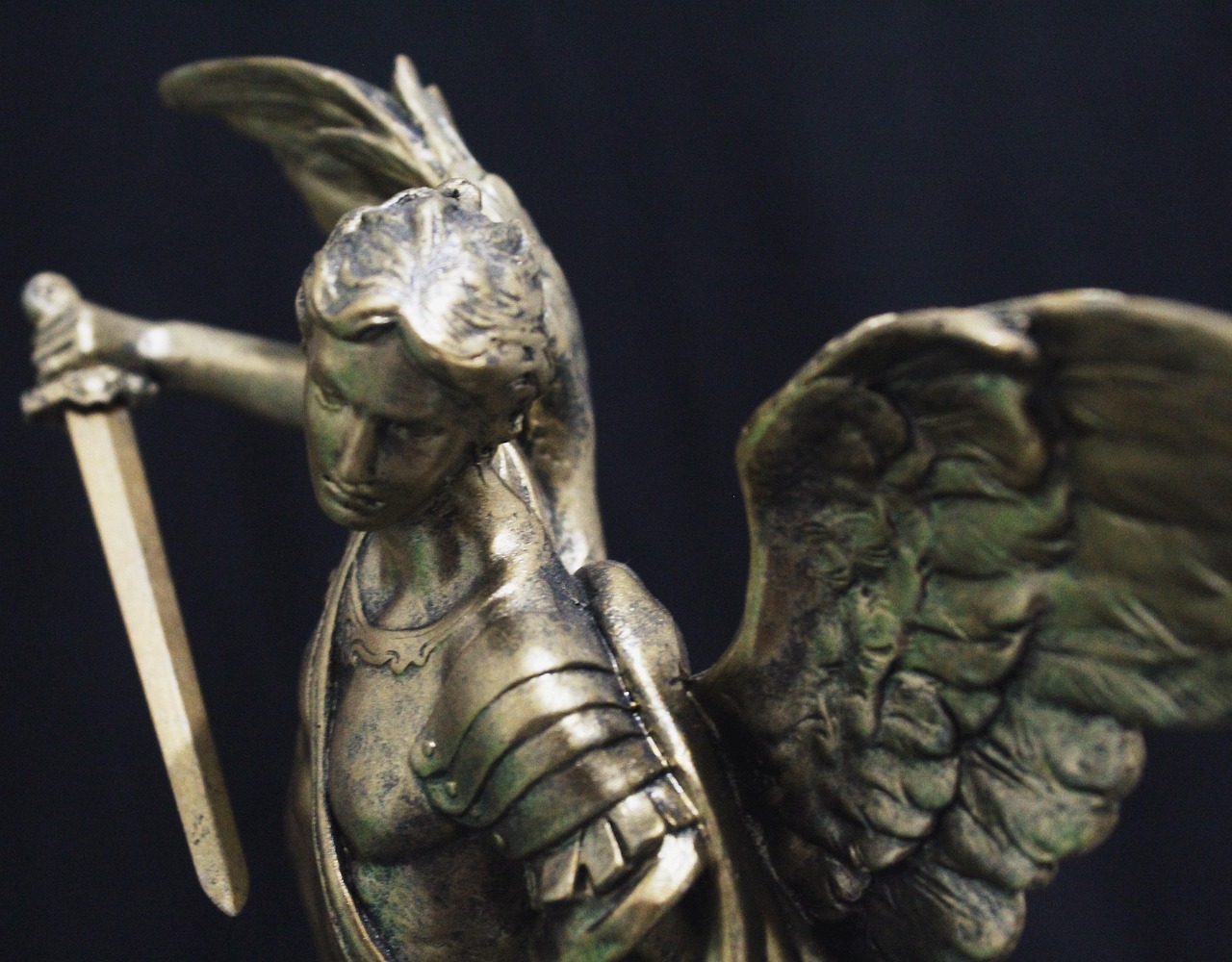
Nearly all of these sites are dedicated to either St. Michael or St. George — dragon-slaying saints — which some researchers believe represent a spiritual overlay placed by the early Christian church onto pre-existing pagan energy sites.
Why Would Ancient Civilizations Care About Energy Lines?
This is where the conversation becomes both fascinating and, admittedly, speculative. The mainstream historical view holds that sacred sites were placed based on practical considerations — proximity to water, visibility, defensibility, or political significance. But this explanation doesn’t fully account for the global patterns.
Geomagnetic Sensitivity
There is legitimate science supporting the idea that certain geological formations emit measurable energy. Fault lines, underground water sources, and crystalline rock formations (like granite, which is common beneath many ancient sacred sites) all generate electromagnetic anomalies that sensitive instruments — and perhaps sensitive people — can detect.
Research conducted at Stonehenge and Avebury has documented elevated electromagnetic readings compared to surrounding areas. Some geologists have noted that many sacred sites sit directly above fault intersections or underground aquifers, suggesting ancient builders may have had a working knowledge of geomancy — the art of reading the earth’s energies.
The Consciousness Connection
Many ancient traditions — Chinese feng shui, Hindu vastu shastra, Celtic druidic practice, and indigenous shamanic traditions worldwide — share a common principle: that the land itself has energy, and that this energy profoundly influences human consciousness and spiritual experience.
When ancient priests or shamans selected a location for ritual, they weren’t choosing arbitrarily. They were choosing places where the veil felt thin — where altered states came more easily, visions more readily, and the presence of the divine seemed more accessible.
Modern consciousness researchers, including those studying altered states and sacred acoustics, have found that some ancient chambers (like those in Maltese hypogea or the chambers beneath Newgrange in Ireland) produce specific resonant frequencies that measurably affect brainwave states — pushing occupants toward theta and delta wave patterns associated with deep meditation and visionary experience.
What Modern Research Suggests
The intersection of archaeology, geology, and consciousness studies has produced some intriguing results in recent decades.
The Dragon Project
Beginning in the 1970s, a multidisciplinary team of researchers called The Dragon Project spent years taking scientific measurements at Rollright Stones in Oxfordshire, England. They documented:
- Ultrasound pulses at certain stones during sunrise
- Radioactivity fluctuations that varied seasonally
- Magnetic anomalies that differed significantly from control sites nearby
These findings didn’t confirm metaphysical theories outright, but they did establish that something measurably different was occurring at these ancient sites.
Satellite Imagery and Mathematical Precision
Modern satellite analysis has revealed that many ancient monuments align with extraordinary mathematical precision — not just to each other, but to solar and lunar cycles, cardinal directions, and stellar positions. The fact that builders thousands of years ago, presumably without modern instruments, achieved this kind of precision suggests a level of astronomical and geographical knowledge that we may be underestimating.
The Spiritual Interpretation
For many people, the scientific debate is secondary to the lived experience of visiting these sites. Pilgrims, healers, meditators, and ordinary travelers frequently report unusually vivid dreams, spontaneous emotional releases, feelings of deep peace, or sudden insights at ancient sacred sites.
Whether these experiences are produced by measurable electromagnetic fields, the accumulated weight of centuries of human intention and prayer, the placebo effect of expectation, or something genuinely metaphysical remains an open question.
What’s worth noting is that virtually every ancient culture on Earth treated certain places in the landscape as inherently sacred — not because a religious authority declared them so, but because generations of direct experience confirmed their power. These weren’t superstitious people stumbling in the dark. Many of them were brilliant astronomers, master builders, and careful observers of the natural world.
Perhaps their placement of sacred sites was simply good practice — an integration of earth science, astronomy, geometry, and spiritual intuition that we have, for a time, forgotten how to read.
Conclusion
The question of why ancient civilizations built on ley lines doesn’t have a single clean answer — and perhaps that’s exactly the point. The mystery sits precisely at the intersection of the measurable and the ineffable, the geological and the sacred, the ancient and the urgently relevant.
Whether ley lines represent electromagnetic channels, ancient trade routes, spiritual arteries, or a combination of all three, the patterns these builders left behind invite us to reconsider what they knew — and what we may have lost. At the very least, they challenge the comfortable assumption that modernity represents the pinnacle of human understanding.
Sometimes, the most sophisticated knowledge is the oldest.
References
-
Alfred Watkins — The Old Straight Track (1925) “Alfred Watkins, The Old Straight Track, Methuen & Co., 1925 — via Internet Archive”
-
John Michell — The View Over Atlantis (1969) “John Michell, The View Over Atlantis, Garnstone Press, 1969”
-
The Dragon Project Trust — Research Overview “The Dragon Project Trust — Official Research Overview”
-
Paul Devereux — Places of Power (1990) “Paul Devereux, Places of Power: Secret Energies at Ancient Sites, Blandford Press, 1990”
-
Rupert Sheldrake — Sacred Sites and Consciousness Research “Rupert Sheldrake — Research Archive, Sacred Sites and Morphic Fields”
-
NASA Goddard — Earth’s Geomagnetic Field Overview “NASA Goddard Space Flight Center — Earth’s Geomagnetic Field, Scientific Overview”
-
Gregg Braden — The Divine Matrix (2007) “Gregg Braden, The Divine Matrix: Bridging Time, Space, Miracles, and Belief, Hay House, 2007”
-
Aaron Watson & David Keating — Acoustic Archaeology Research, Newgrange “Watson & Keating — Acoustic Studies of Megalithic Chambers, Cambridge Archaeological Journal”
About the Author
Jordan Vale is a researcher and writer focused on ancient history, consciousness studies, and the intersection of science and spirituality. With a background in cultural anthropology and years spent traveling to sacred sites across Europe, South America, and Southeast Asia, Jordan brings both academic rigor and personal experience to explorations of humanity’s deepest mysteries. Jordan’s work has appeared across multiple digital publications dedicated to expanding the boundaries of conventional understanding.
Disclaimer: This article is intended for educational and informational purposes only. The topics explored here — including ley lines, earth energies, and related phenomena — represent a combination of established historical research, emerging scientific inquiry, and speculative theory. Not all claims presented reflect the consensus of mainstream academic science. Readers are encouraged to approach this content with discernment, conduct their own research, and consult qualified experts when appropriate. AscensionPulse.com does not make medical, psychological, or metaphysical claims, and nothing in this article should be interpreted as professional advice of any kind.
© 2026 AscensionPulse.com. Some Rights Reserved.
This work is licensed under a Creative Commons Attribution-NonCommercial-NoDerivatives 4.0 International License. You may share this content for non-commercial purposes with proper credit and without alterations. For permissions beyond this license, contact AscensionPulse.com.
Enjoyed this article?
Support the work that makes it possible.
Amount applies to both PayPal and Stripe.